
COOLERS VS. REEFERS
Why refrigerate an entire trailer when only part of your load requires temperature control?
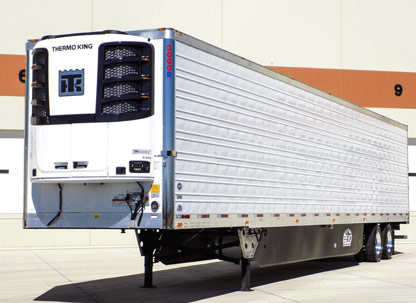
Reefer trailers remain an excellent solution for full loads of refrigerated or frozen products.
But many distribution operations do not require an entire trailer to be temperature controlled.
When only a portion of the load requires refrigeration, Verne Solutions Industrial Coolers provide another option: protect the temperature sensitive cargo instead of refrigerating the entire trailer.
PROTECT THE PRODUCT. NOT THE ENTIRE TRUCK.
THE MIXED LOAD PROBLEM
Imagine a distribution route carrying:
FROZEN
REFRIGERATED
Traditional Approach
Refrigerate the entire trailer or Separate the temperature controlled shipment.
Verne Approach
Place the refrigerated products inside Verne Industrial Coolers and transport them together with the dry products in the same dry trailer.
NO REFRIGERATION EQUIPMENT ON THE ROAD
No onboard refrigeration unit
No reefer diesel consumption during transportation
No compressor
No refrigeration engine
No dry ice
No conventional ice
Reusable Ice Packs
Passive thermal protection during transportation
WHEN DOES A REEFER MAKE SENSE?
When an entire trailer is filled with refrigerated or frozen products and continuous active refrigeration is required, a conventional reefer may remain the appropriate solution.
WHEN CAN INDUSTRIAL COOLERS MAKE MORE SENSE?
Industrial Coolers can be particularly attractive for:
Mixed temperature loads
Partial refrigerated loads
Distribution routes
Last mile delivery
Fresh and frozen food distribution
Temperature sensitive products
Operations looking to reduce dependence on refrigerated vehicles
A Practical 8 Year Cost Comparison between Distribution
using our Coolers and Reefers
Understanding the Real Cost of Refrigerated Transportation
To avoid any possible confusion, when we talk about a Reefer, we are referring to a refrigerated trailer equipped with its own refrigeration unit.
Before comparing alternatives, let’s take a close look at the costs involved in operating a Reefer trailer.
First, we will examine the Reefer.
Then, we will compare it with a conventional dry trailer.
Finally, we will see what happens when Industrial Coolers are incorporated into that operation.
The objective is not to claim that one solution is always better than another. It is to understand the numbers and determine which solution, or combination of solutions, makes the most sense for each operation.
ASSUMPTIONS USED IN THIS ANALYSIS
The following comparison uses the operating assumptions described in this example. Actual equipment prices, fuel costs, labor costs, maintenance requirements and operating conditions vary by company, location and application.
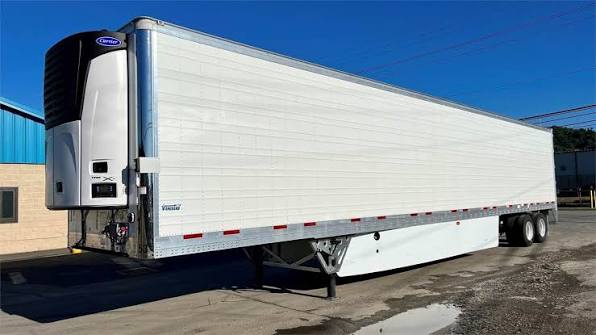
WHAT DOES A REEFER REALLY COST?
Let’s start with the equipment itself.
For this analysis, we will assume that purchasing a new 53 foot Reefer trailer represents an investment of approximately:
$90,000
The actual price may vary depending on the model, specifications, manufacturer and location.
But purchasing the trailer is only the beginning.
Once it enters operation, there are operating and maintenance costs that are frequently underestimated or assumed to be lower than they actually are.
So let’s look at them one by one.
OPERATING COST: DIESEL
Here is something that may surprise people who are not familiar with refrigerated transportation.
Most Reefer refrigeration units are self powered.
They are not simply receiving refrigeration power from the truck pulling the trailer.
Typically, the refrigeration unit contains its own diesel engine, often a four cylinder engine.
The mechanism is relatively straightforward:
It works under a concept similar to your vehicle’s air conditioning system, where an engine provides the mechanical power required by a compressor.
Now comes the important question:
HOW MUCH DIESEL DOES A REEFER REFRIGERATION UNIT CONSUME?
The answer depends on several factors:
Age and condition of the unit
Maintenance
Outside temperature
Trailer insulation
Required cargo temperature
Operating conditions
Driver practices
For purposes of this analysis, we will use the following operating range:
0.4 TO 1.1 GALLONS PER HOUR
with an assumed average of:
0.75 GALLONS PER HOUR
This is precisely why Reefer trailers have a separate diesel tank, commonly with capacities such as 25 or 50 gallons.
When a loaded Reefer is transporting refrigerated or frozen products, the refrigeration system must continue protecting the cargo even when the truck itself is stopped.
Now let’s do the math.
Assume the refrigeration unit operates:
10 hours per day × 5 days per week × 50 weeks per year
That equals:
2,500 OPERATING HOURS PER YEAR
Now:
2,500 hours × 0.75 gallons/hour = 1,875 gallons of diesel per year
Using an assumed diesel price of $4.00 per gallon:
1,875 gallons × $4.00 = $7,500 per year
That is the first major operating cost in our example.
2,500 HOURS/YEAR
1,875 GALLONS/YEAR
$7,500/YEAR
LABOR AND MAINTENANCE
Driver Cost Difference
Refrigerated transportation can require additional driver knowledge and operational responsibility because temperature controlled cargo must be handled correctly.
For this example, we will use the following driver compensation assumptions:
Average weekly pay, dry trailer driver: $1,400
Average weekly pay, Reefer trailer driver: $2,040
Difference:
$640 PER WEEK
Approximately:
$2,560 PER MONTH
And:
$30,720 PER YEAR
DRIVER COST DIFFERENCE USED IN THIS MODEL: $30,720 PER YEAR
This is an assumption used for this particular cost model. Actual labor costs and compensation structures will vary by company and operation.
Refrigeration Unit Service
A Reefer refrigeration unit is a mechanical refrigeration system and requires periodic technical service.
For this model, we assume service approximately every:
1,000 OPERATING HOURS
Using an average of 5,000 operating hours per year, this would represent approximately five service visits.
Using the following service cost assumption:
$250 per hour × minimum 2 hours = $500 per service
Five services would represent approximately:
$2,500 PER YEAR
in refrigeration unit technical service under this model.
Repairs and Major Refrigeration Unit Work
Routine maintenance is not the only consideration.
As equipment ages, repairs become part of the operating reality.
For this model, we assume approximately one medium refrigeration unit repair per year after the first year, with an estimated average cost of:
$2,000
The analysis also assumes approximately:
40,000 hours of useful life for the Reefer trailer
and approximately:
20,000 hours for the refrigeration unit
At an assumed 5,000 operating hours per year, the model therefore introduces a major refrigeration unit rebuild or replacement around year four, estimated at:
$20,000

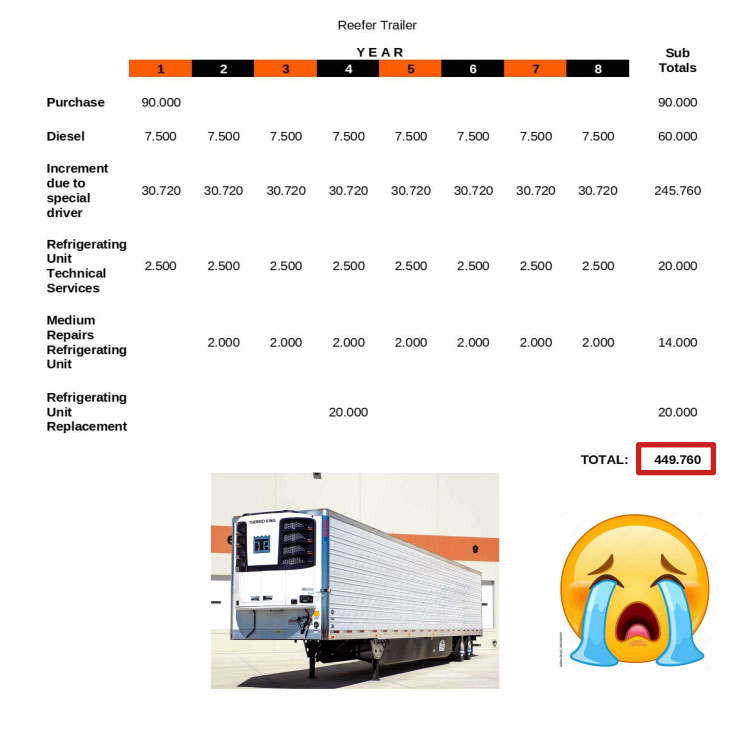
8 YEAR REEFER COST MODEL
Purchase: $90,000
Diesel: $60,000
Driver Cost Difference Used in This Model: $245,760
Refrigeration Unit Technical Service: $20,000
Medium Refrigeration Unit Repairs: $14,000
Refrigeration Unit Replacement / Rebuild: $20,000
ESTIMATED 8 YEAR TOTAL UNDER THIS MODEL:
$449,760
These numbers represent the assumptions of this particular operating model and are intended to illustrate the cost structure.
Individual operations may produce different results.
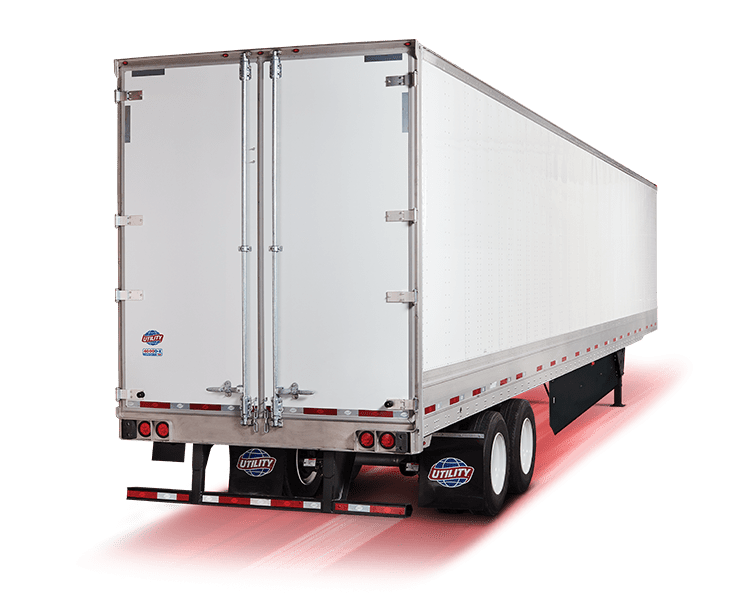
NOW COMPARE A DRY TRAILER
Now let’s perform the same basic exercise with a conventional 53 foot dry trailer.
For this analysis, we will assume a purchase price of approximately:
$41,000
The fundamental difference is obvious.
A dry trailer does not have a refrigeration unit.
Therefore, the refrigeration related costs included in the previous example disappear:
Refrigeration diesel: $0
Reefer specific driver increment: $0
Refrigeration unit technical service: $0
Refrigeration unit repairs: $0
Refrigeration unit replacement: $0
Under this simplified eight year comparison:
DRY TRAILER TOTAL: $41,000
Of course, this does not mean that a dry trailer can simply replace a Reefer when temperature control is required.
It cannot.
The important question is:
WHAT IF THERE WERE ANOTHER WAY TO PROVIDE TEMPERATURE PROTECTION FOR ONLY THE PORTION OF THE LOAD THAT ACTUALLY NEEDS IT?
Here is where things get interesting.
“BUT IF I NEED REFRIGERATION, I NEED A REEFER.”
Many operators might reasonably think:
“I understand that Reefers are expensive and complicated, but if I need to move refrigerated or frozen products, I have no choice.”
That has been the traditional paradigm.
But it is not necessarily the only option for every route.
And we want to make something very clear.
There are many excellent Reefer manufacturers in the market.
Their engineers have spent countless hours improving efficiency, reliability and environmental performance, and Reefer technology has provided an essential service to the global cold chain for decades.
We respect that technology and the companies behind it.
THE QUESTION IS NOT WHETHER REEFERS WORK.
They absolutely do.
The real question is:
DOES EVERY REFRIGERATED TRANSPORTATION SCENARIO ACTUALLY REQUIRE AN ENTIRE REFRIGERATED TRAILER?
In many operations, the answer may be no.
ENTER THE INDUSTRIAL COOLER
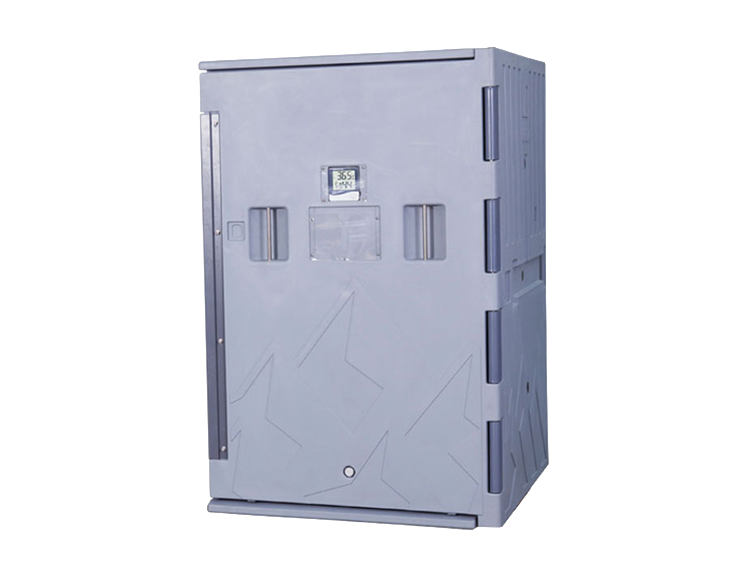
This is where Verne Solutions introduces a different approach.
When people hear the word “cooler,” they may immediately imagine a conventional portable cooler.
That is not what we are talking about.
We are talking about an:
INDUSTRIAL COOLER
Verne Solutions Industrial Coolers are large, rotomolded units engineered with high performance thermal insulation designed to significantly reduce heat transfer into the interior.
The small amount of heat that does enter the Industrial Cooler can be absorbed by strategically positioned reusable Industrial Ice Packs.
The result is a passive cooling system designed to maintain temperature controlled products for extended periods without requiring an active refrigeration unit on the road.
REUSABLE INDUSTRIAL ICE PACKS
Industrial Ice Packs are an essential component of the system.
THEY ARE 100% REUSABLE.
According to the Verne operating cycle:
THEY CAN BE FROZEN OVERNIGHT AND PREPARED FOR REUSE IN APPROXIMATELY 8 HOURS.
The combination of:
INDUSTRIAL COOLER + THERMAL INSULATION + REUSABLE INDUSTRIAL ICE PACKS
provides a way to transport refrigerated or frozen products for many hours inside a conventional dry trailer.
During transportation, the passive cooling system itself requires:
• No refrigeration diesel engine
• No electrical refrigeration equipment
• No dry ice
• No conventional ice
The cooling protection travels with the product inside the Industrial Cooler.
WHEN DOES AN INDUSTRIAL COOLER MAKE SENSE?
This is perhaps the most important part of the analysis.
INDUSTRIAL COOLERS ARE NOT INTENDED TO REPLACE EVERY REEFER.
If you have a full load of approximately 26 pallets of refrigerated or frozen products occupying essentially the entire trailer, a conventional Reefer trailer will generally be the logical solution.
But what happens when only a small portion of your load needs refrigeration?
That is where the economics can change.
A REALISTIC MIXED LOAD EXAMPLE
Imagine that one of your distribution routes requires:
20 PALLETS OF DRY PRODUCTS
4 PALLETS OF REFRIGERATED PRODUCTS
What do you do?
Traditionally, an operation may have several choices.
It can hold the refrigerated products until enough volume accumulates to justify a Reefer.
It can subcontract those refrigerated pallets to another transportation provider.
Or it can send the entire mixed load in refrigerated equipment.
All of those alternatives can create additional cost, planning and operational complexity.
But there is another possibility.
PLACE THE REFRIGERATED PRODUCTS INSIDE FOUR INDUSTRIAL COOLERS AND TRANSPORT THEM TOGETHER WITH THE DRY CARGO IN A CONVENTIONAL DRY TRAILER.
Now the same vehicle can potentially carry:
DRY PRODUCTS + TEMPERATURE CONTROLLED PRODUCTS
without requiring the entire trailer to operate as a refrigerated environment.
That is the operational opportunity Verne Solutions is designed to address.
THE 20/80 RULE OF THUMB
Here is a simple rule of thumb to consider.
When approximately:
20% OR LESS
of the cargo requires refrigerated or frozen conditions,
while:
80% OR MORE
is dry cargo,
Industrial Coolers may provide a more cost effective and operationally efficient alternative to refrigerating the entire trailer.
This is not intended to replace a detailed operational analysis.
Every route, product, loading process, ambient condition and temperature requirement must be evaluated individually.
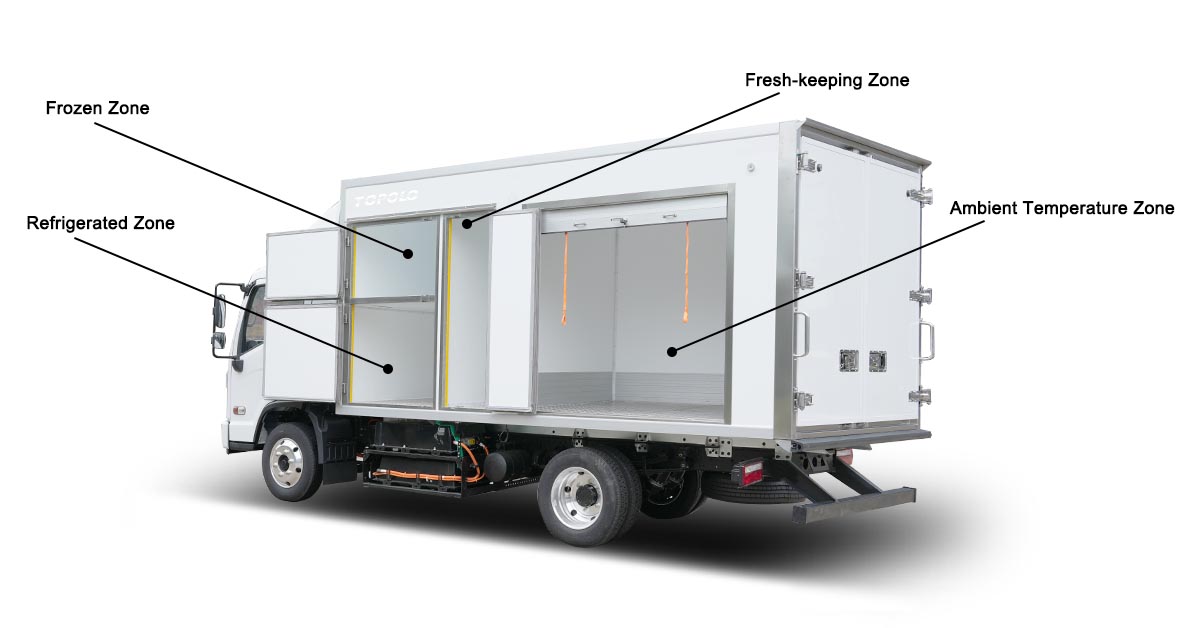
WHAT ABOUT MULTI ZONE TRUCKS?
There is another technical solution for mixed temperature transportation:
MULTI ZONE VEHICLES
These systems divide a vehicle into separate temperature controlled compartments.
Technically, they can solve the mixed temperature problem.
But they also introduce additional equipment and complexity.
For comparison, this analysis uses the example of a 2024 28 foot Multi Zone truck priced at approximately:
$215,000
Again, prices and configurations vary, but the example illustrates why companies should evaluate the economics of different technologies rather than automatically assuming one solution fits every route.
NOW ADD INDUSTRIAL COOLERS TO THE DRY TRAILER
Here is the final step in the comparison.
For this analysis, we will use a budgetary figure of up to approximately:
$7,000
for even our largest Industrial Cooler with accessories.
Now imagine an operation purchasing:
4 INDUSTRIAL COOLERS
Estimated investment:
$28,000
$41,000 + $28,000 = $69,000
For our eight year model, we will also include a small allowance for possible replacement parts and maintenance:
Year 4 door seals: $800
Possible small replacement parts: $100
Year 8 door seals: $800
Total estimated allowance:
$1,700
This produces an illustrative eight year total of:
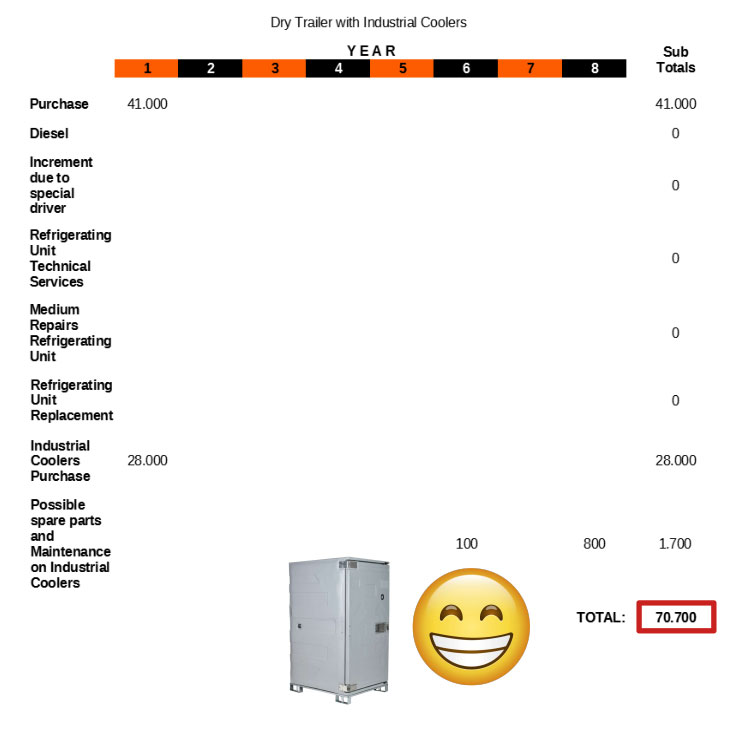
$70,700
for the dry trailer plus four Industrial Coolers under the assumptions used in this analysis.
8 YEAR DRY TRAILER + INDUSTRIAL COOLERS MODEL
Dry Trailer Purchase: $41,000
Industrial Coolers Purchase: $28,000
Possible Spare Parts and Maintenance Allowance: $1,700
ESTIMATED 8 YEAR TOTAL UNDER THIS MODEL: $70,700
NOW COMPARE THE TWO MODELS
After going through the assumptions and calculations step by step, we can finally put the two scenarios side by side:
REEFER MODEL, 8 YEARS
$449,760
DRY TRAILER + 4 INDUSTRIAL COOLERS MODEL, 8 YEARS
$70,700
DIFFERENCE UNDER THE ASSUMPTIONS USED IN THIS ANALYSIS
$379,060
That difference is not presented as a universal savings guarantee.
It is the result of the assumptions used in this particular example.
And that is exactly why we encourage every company to run the numbers using its own equipment costs, fuel prices, labor costs, routes, cargo mix, maintenance history and operating conditions.
THERE IS NO UNIVERSAL ANSWER
We are not suggesting that one solution is always right and another is always wrong.
Real operations have a thousand shades of gray.
A Reefer may be exactly the right solution for one route.
A dry trailer with Industrial Coolers may be more efficient for another.
And in many operations, the best answer may be a combination of both technologies.
That is why every Operations VP should carefully analyze the operation together with Transportation Managers, logistics teams and drivers.
Look at:
• Cargo mix
• Temperature requirements
• Route duration
• Ambient conditions
• Equipment utilization
• Refrigerated volume
• Dry volume
• Labor
• Maintenance
• Fuel
• Operational flexibility
Then determine which solution, or combination of solutions, best fits the business.
The purpose of this analysis is to give you another way to look at the problem.
Take your own numbers.
Look at your own routes.
Consider your own operating conditions.
And do the math.
RUN THE NUMBERS.
UNDERSTAND YOUR OPERATION.
THEN CHOOSE THE SOLUTION THAT MAKES SENSE.
WANT TO RUN THE NUMBERS FOR YOUR OPERATION?
Verne Solutions can help evaluate your current transportation setup, temperature requirements, cargo mix and route conditions to determine whether Industrial Coolers can complement your existing system.
LET’S CALCULATE YOUR POTENTIAL SAVINGS
Every operation is different.
Tell us your route duration, number of temperature controlled pallets, required temperature and current transportation setup.
Verne Solutions can help evaluate whether Industrial Coolers make operational and financial sense for your application.