
REDUCING EMISSIONS VS. REEFER OPERATIONS
Passive Cold Chain Solutions for Lower On Road Refrigeration Energy Use
ACTIVE REFRIGERATION REQUIRES ENERGY
Reefer trailers provide an essential solution for transporting temperature sensitive products. Their refrigeration units actively maintain cargo temperature throughout transportation and typically require a continuous source of energy while operating.
For many full load refrigerated or frozen operations, a reefer remains the appropriate transportation solution.
However, not every route requires active refrigeration for the entire trailer.
For certain distribution applications, Verne Industrial Coolers can provide passive thermal protection for temperature sensitive products while traveling inside a conventional dry truck or trailer.
ACTIVE REFRIGERATION
REEFER OPERATION
Active refrigeration requires energy throughout the transportation cycle.
PASSIVE THERMAL PROTECTION
VERNE INDUSTRIAL COOLER
Once properly prepared, the Verne system does not require active refrigeration inside the Industrial Cooler during transportation.
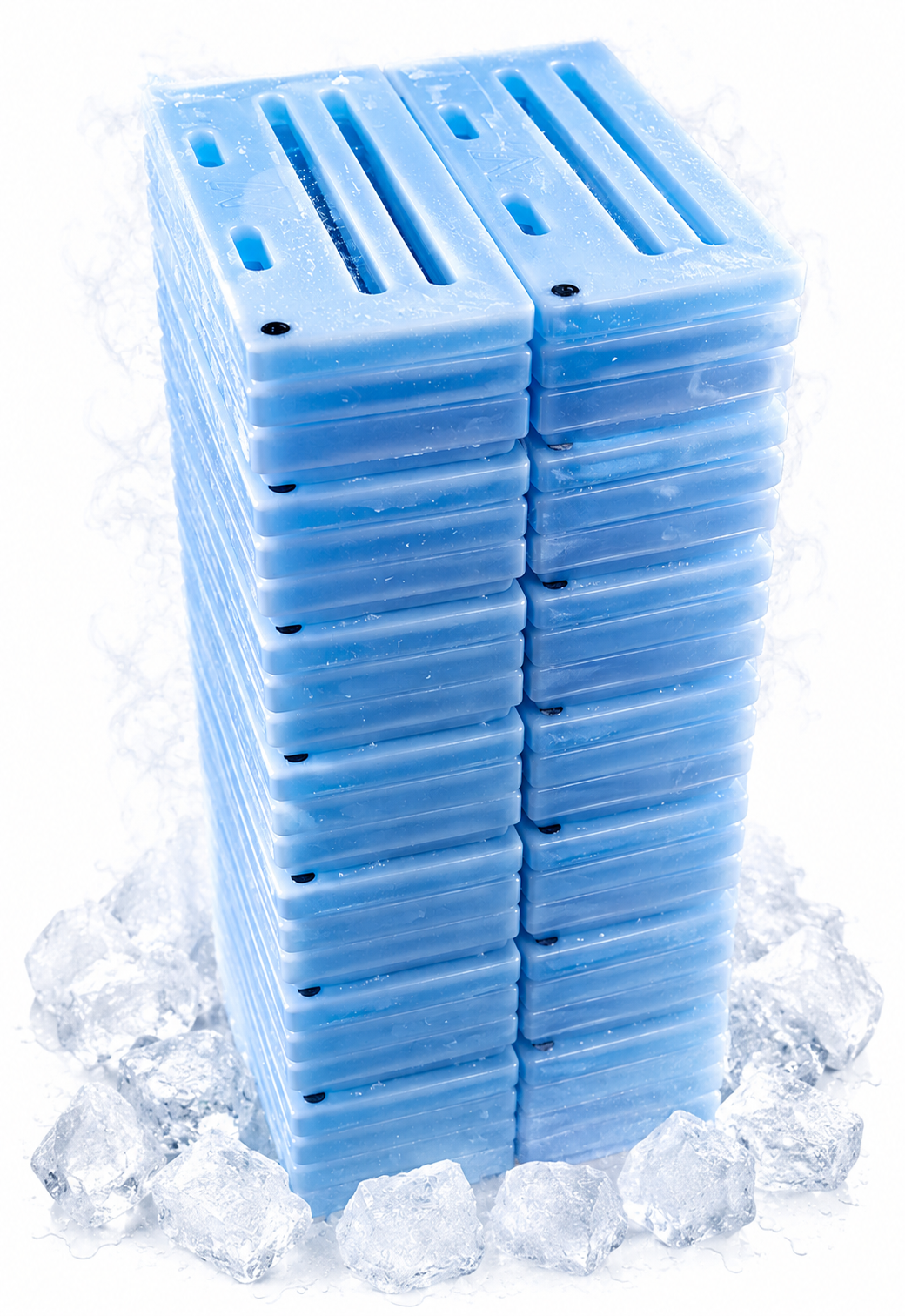
NO DIESEL. NO ELECTRICITY. NO ACTIVE COOLING ON THE ROAD.
For temperature control inside the Industrial Cooler during transport.
The Ice Packs are frozen before the route and provide passive thermal protection throughout the distribution cycle.
PASSIVE COOLING.
REUSABLE EVERY DAY.
Verne Industrial Ice Packs are reusable and designed for repeated industrial cold chain operations.
After each route, the Ice Packs are returned to the freezer, refrozen and prepared for the next distribution cycle.
WHEN DOES PASSIVE
COOLING MAKE SENSE?
Industrial Coolers are particularly valuable when only part of a shipment requires temperature control. For example, a distribution route may carry primarily dry products together with a smaller quantity of refrigerated or frozen products.
Instead of actively refrigerating the entire trailer, the temperature sensitive products can be protected inside appropriately configured Verne Industrial Coolers while the remaining cargo travels under normal dry conditions.
MIXED TEMPERATURE LOAD EXAMPLE
Protect the temperature sensitive portion of the load instead of refrigerating the entire cargo space.
Dry Products
Temperature Sensitive Products
+
VERNE INDUSTRIAL COOLERS
WHY REFRIGERATE THE ENTIRE TRUCK WHEN
ONLY PART OF THE LOAD NEEDS TEMPERATURE PROTECTION?
For suitable mixed load and partial load applications,
Verne Industrial Coolers can help reduce dependence on active refrigerated transportation.
Potential operational benefits may include:
Reduced active refrigeration requirements
Reduced on road refrigeration energy consumption
Reusable passive cooling
Greater flexibility for mixed temperature loads
Simplified distribution planning
Potential reduction in refrigeration related operating costs
Potential reduction in refrigeration related emissions
THE RIGHT SOLUTION DEPENDS ON THE OPERATION
Reefer transportation remains an important and effective solution for many full load refrigerated and frozen applications.
Verne Industrial Coolers are not intended to replace every reefer operation.
Our objective is to identify applications where passive thermal protection can provide a more efficient alternative, particularly for mixed loads, partial temperature controlled loads and selected distribution routes.
How and When Industrial Coolers Can Reduce the Carbon Footprint Associated with Reefer Operations
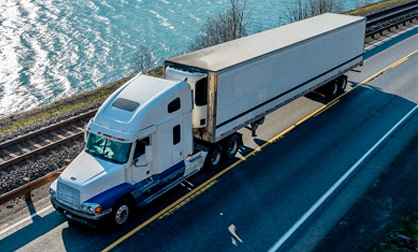
Many readers are familiar with the large trucks transporting refrigerated and frozen products on roads around the world. They look similar to the truck shown below.
Let’s take a closer look.
At the front of a refrigerated trailer, you will notice a large unit that, to someone unfamiliar with the equipment, may look like a specialized air conditioning system.
That is essentially what it is: a refrigeration unit, commonly known in the transportation industry as a Reefer.
Many people assume that this refrigeration unit is somehow powered by the truck pulling the trailer.
After all, the air conditioning system in a building needs electricity, so it would be reasonable to assume that the Reefer receives its power from the tractor.
But that is generally not how it works.
HOW DOES A REEFER ACTUALLY WORK?
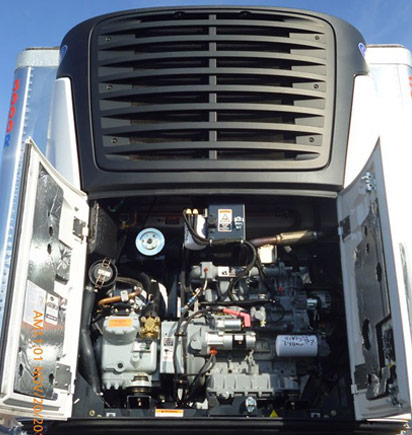
What may surprise some readers is that many Reefer units are self powered.
How?
Typically, the refrigeration unit has its own diesel engine. And although it may be described as a “small” engine compared with the tractor engine, it is still a substantial piece of equipment.
The basic mechanism is straightforward.
A diesel engine powers a compressor, allowing the refrigeration system to produce the cooling required to maintain cargo at refrigerated or frozen temperatures.
The concept is similar to your vehicle engine powering the compressor used by its air conditioning system.
The difference is that, in this case, the refrigeration unit is protecting an entire trailer full of temperature sensitive products.
HOW MUCH DIESEL DOES A REEFER USE?
That depends on several factors:
• Age and condition of the refrigeration unit
• Maintenance
• Outside temperature
• Thermal insulation of the trailer
• Required cargo temperature
• Operating practices
In the operating assumptions used in this analysis, Reefer fuel consumption is considered within a range of:
0.4 TO 1.1 GALLONS PER HOUR
with an assumed average of:
0.75 GALLONS PER HOUR
This is one of the reasons Reefer trailers have a separate diesel tank, commonly with capacities such as 25 or 50 gallons.
Once a Reefer is loaded and operating, its refrigeration system must continue maintaining the required cargo temperature, whether the truck is moving or temporarily stopped.
So let’s do some simple math.

LET’S RUN THE NUMBERS
For this example, let’s assume that the refrigeration unit operates:
10 hours per day
5 days per week
50 weeks per year
That gives us:
10 × 5 × 50 = 2,500 OPERATING HOURS PER YEAR
Now apply the assumed average fuel consumption:
2,500 HOURS × 0.75 GALLONS/HOUR = 1,875 GALLONS OF DIESEL PER YEAR
Now comes the environmental part of the calculation.
Each gallon of diesel generates approximately 10.22 kilograms of CO₂.
Using that emissions factor, the annual fuel consumption modeled above represents approximately:
19 METRIC TONS OF CO₂ PER YEAR
for the operating scenario analyzed.
And that is for one Reefer unit.
In the USA, it is estimated that there are approximately 500,000 active Reefer units, with around 70,000 new units sold each year. Of course, older units are also retired from service over time.
NOW LET’S LOOK AT THE ALTERNATIVE
Before going any further, we want to make something very clear.
There are many excellent Reefer manufacturers in the market. These systems have performed an essential job for decades, transporting refrigerated and frozen products safely around the world.
Their engineers continue working to make these systems cleaner, more efficient and more reliable.
This is not an argument that Reefers are bad or unnecessary.
It is an argument that not every cold chain application necessarily requires a Reefer.
And that distinction is where Industrial Coolers become interesting.
ENTER THE INDUSTRIAL COOLER
Many readers may hear the word “Cooler” and immediately think they already know what we mean.
But there is an important word in our product name:
INDUSTRIAL.
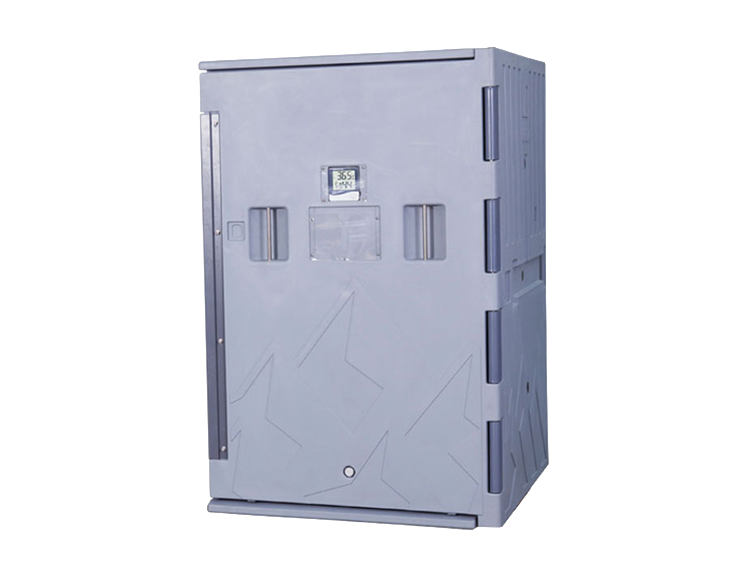
Verne Solutions Industrial Coolers are large, highly insulated units manufactured using rotomolding technology and designed to significantly reduce heat transfer from the external environment.
No thermal insulation system completely eliminates heat transfer.
The small amount of heat that enters the Industrial Cooler is managed with strategically positioned reusable Industrial Ice Packs.
Our Industrial Ice Packs are:
100% REUSABLE
and can be prepared for reuse through an approximately:
8 HOUR OVERNIGHT FREEZING CYCLE
Together, the Industrial Cooler and reusable Industrial Ice Packs create a passive cooling system capable of transporting refrigerated or frozen products for extended periods inside a conventional dry vehicle.
And while the cargo is on the road, the system does not require:
• A refrigeration engine
• Diesel fuel to power a refrigeration unit
• Electrical refrigeration equipment
• Dry ice
• Conventional ice
Therefore, during transportation, there are no direct CO₂ emissions associated with actively powering refrigeration inside the Industrial Cooler.
SO, SHOULD INDUSTRIAL COOLERS REPLACE REEFERS?
No.
And this is important.
If you have a full load of approximately 26 pallets and need to use essentially 100% of the available space inside a refrigerated trailer, then a conventional Reefer may be the best solution.
But what happens when refrigerated or frozen products represent only a portion of the load?
That is where the economics and logistics begin to change.
LET’S LOOK AT A REALISTIC EXAMPLE
Imagine that your route requires:
20 PALLETS OF DRY PRODUCTS
4 PALLETS OF REFRIGERATED PRODUCTS
What are your options?
One possibility is to hold the refrigerated products until there is enough volume to justify dispatching a Reefer.
Another possibility is to subcontract those four refrigerated pallets to another transportation company.
Both alternatives can create additional cost, planning and operational complexity.
But there is another possibility.
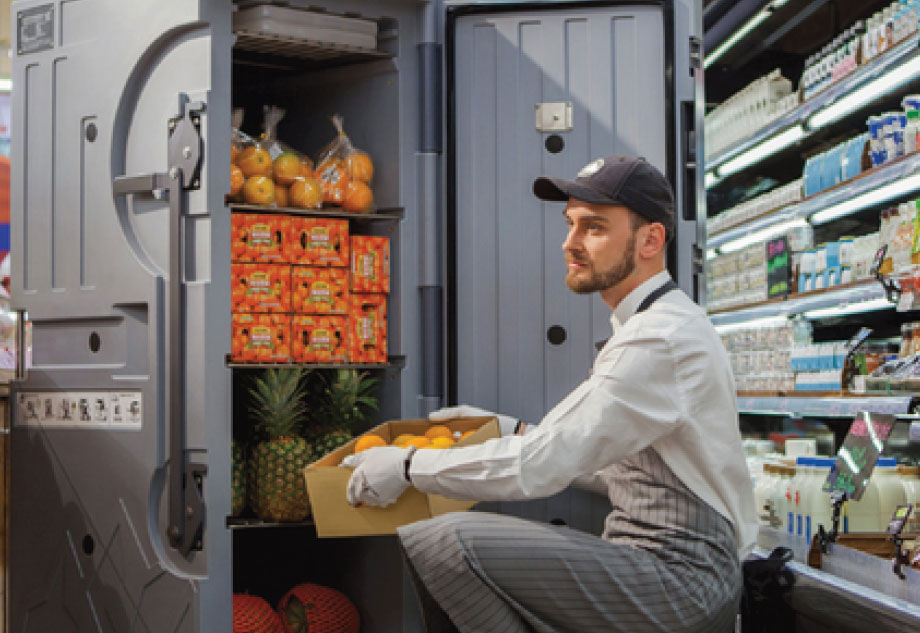
The refrigerated products can potentially be placed inside appropriately configured Verne Industrial Coolers and transported inside the same conventional dry trailer carrying the dry products.
Now you are using the transportation capacity you already have while providing a separate protected temperature environment for the refrigerated portion of the load.
WHEN DOES THIS APPROACH MAKE SENSE?
As a general starting point, operations where refrigerated or frozen products represent approximately:
20% OR LESS OF THE TOTAL LOAD
while approximately:
80% OR MORE IS DRY PRODUCTS
may be particularly worth evaluating for an Industrial Cooler configuration.
Because every operation is different, actual suitability depends on temperature requirements, route duration, ambient conditions, loading procedures, product characteristics and system configuration.
NOW IMAGINE THE SCALE
And this is where the numbers become interesting.
Let’s imagine, only as an exercise, that Industrial Coolers could appropriately replace the active refrigeration requirement in just:
5% OF CERTAIN REEFER APPLICATIONS
Using the assumptions developed in this article:
25,000 REEFER APPLICATIONS
multiplied by approximately:
19 METRIC TONS OF CO₂ PER YEAR
would represent:
475,000 METRIC TONS OF CO₂
associated with the annual refrigeration fuel consumption modeled in this example.
Almost half a million metric tons.
And that would be every year, under the assumptions of this scenario.
BUT WE HAVE A DREAM…
What if we could identify just a small percentage of cold chain operations where active refrigeration is being used simply because, until now, there appeared to be no practical alternative?
What if some of those operations could use passive cooling instead?
The company could reduce operating complexity and refrigeration related costs.
The products could remain protected within a properly designed cold chain system.
The operation could reduce its dependence on fossil fuel powered refrigeration.
And the environmental impact associated with maintaining temperature on the road could be reduced.
Is 5% too much to ask?
We leave that for each reader to consider.
REDUCE REFRIGERATION WHERE YOU DON’T NEED IT.
Every distribution operation is different.
Verne Solutions can evaluate your temperature requirements,
route duration, load configuration and operating conditions
to identify opportunities to reduce dependence on active refrigerated transportation..